
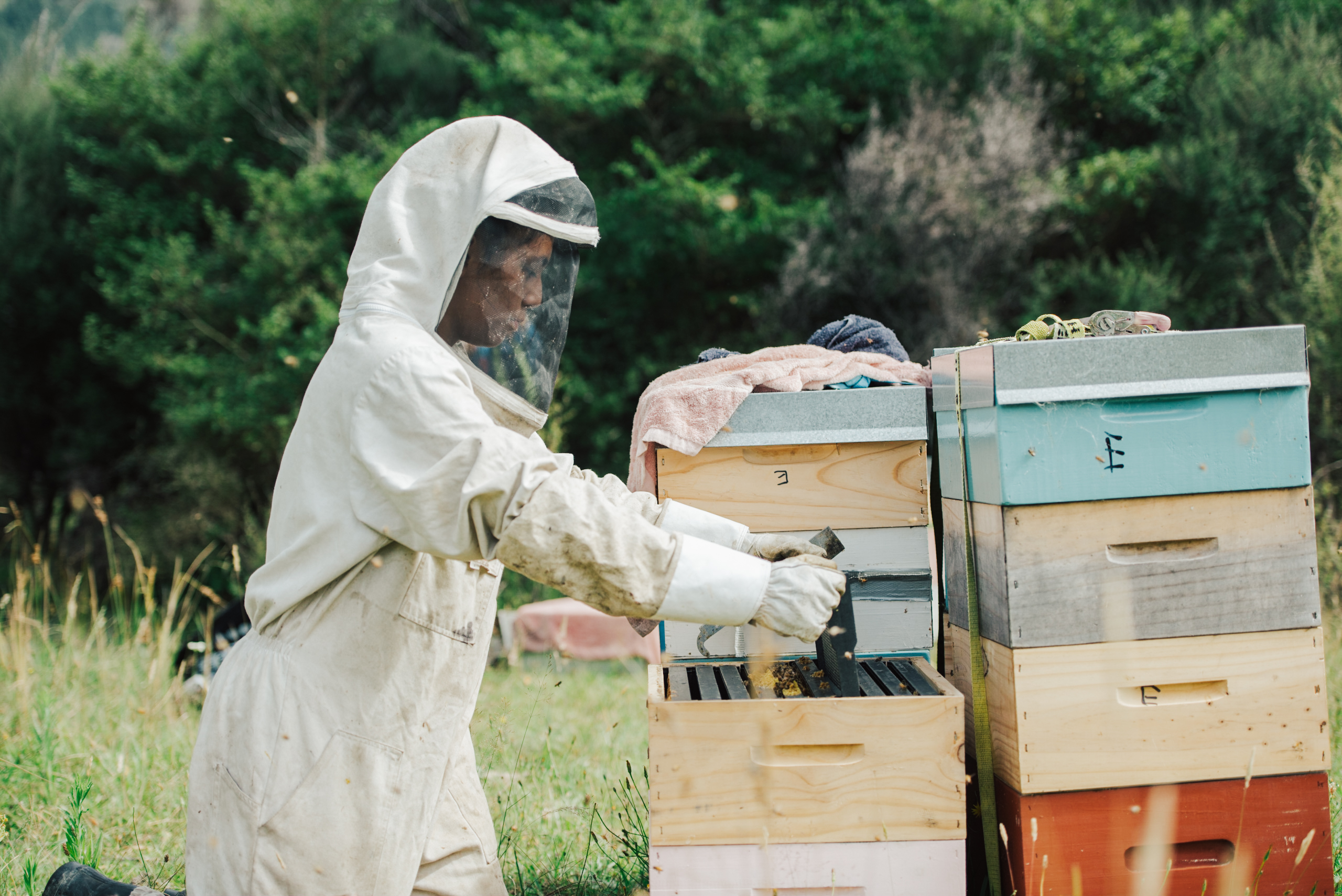
A sting feels personal—but it usually isn’t. Bees sting to protect the colony, and most stings happen for predictable reasons. The good news: once you understand the triggers, you can prevent most stings—and the right clothing makes prevention easier.
The real reasons bees sting
Bees are more likely to sting when:
- The hive is opened during poor weather (cold, windy, stormy)
- There’s a nectar dearth (less food = more defensive)
- The colony is queenless or stressed
- You crush bees accidentally (alarm pheromone spreads fast)
- Predators have been bothering the hive (skunks, ants, robbing)
- You move too fast or bump equipment repeatedly
The role of clothing (it’s not just “armor”)
Protective clothing helps in three key ways:
- Physical protection: fewer stings get through
- Confidence: you move slower and smoother
- Consistency: you can finish inspections without rushing
When you’re not flinching, you’re less likely to:
- Drop frames
- Crush bees
- Make jerky movements that escalate defensiveness
Where stings happen most (and what that means for design)
Common sting zones:
- Wrists (glove/jacket gap)
- Ankles (pant/boot gap)
- Neck/zipper area
- Thighs/arms if fabric is tight
So good beekeeping clothing should prioritize:
- Strong wrist and ankle closures
- A secure veil connection
- A zipper line that lays flat and seals cleanly
- Roomy fit to keep fabric off skin
Clothing doesn’t replace good beekeeping— it supports it
Pair good gear with:
- Proper smoker use (calm, not choking the hive)
- Slow movements and gentle frame handling
- Timing inspections for warmer, calmer parts of the day
- Avoiding strong scents (perfume, scented detergents)
If you’re getting stung through gaps or feeling rushed in the yard, it’s time to upgrade to clothing designed to seal the weak points and keep you comfortable while you work. Explore Apiary Clothing and choose gear that helps you stay calm—and get stung less.


0 Comments